

Once a vital artery for regional trade, cargo transport on Lake Victoria has dwindled from handling nearly a third of Uganda’s imports and exports to almost negligible levels, exposing deep structural failures in infrastructure, policy, and investment.
Industry leaders, private sector representatives, and government officials describe a sector at a tipping point — caught between renewed optimism and longstanding constraints that continue to stifle its recovery.
Inland water transport’s share of Uganda’s cargo has collapsed from about 30 percent in the early 2000s to roughly 1 percent today.
Alex Mbonye, director of East Africa Marine Transport Company Limited, says the decline was both dramatic and avoidable.
“Water transport was very vibrant up to the mid-2000s. Thirty percent of cargo moved through the lake, but all that collapsed around 2005 to 2006,” he said.
According to Mbonye, the collapse was triggered by a combination of operational shocks and policy missteps. A major vessel sinking incident eroded confidence in lake transport, while the concessioning of key assets under Uganda Railways Corporation to an investor uninterested in water transport effectively sidelined the sector.
The consequences were immediate and long-lasting. Cargo shifted overwhelmingly to road transport along the Northern Corridor from Mombasa and, to a lesser extent, the Central Corridor through Tanzania. Today, trucks dominate Uganda’s logistics landscape.
The shift has come at a cost. Uganda’s roads now carry the vast majority of cargo, placing enormous pressure on infrastructure, increasing accident risks, and driving up logistics expenses.
Mbonye argues that reviving lake transport is no longer optional.
“There’s too much traffic on the road. Water transport is cheaper, and we want to see more cargo move by lake,” he said.
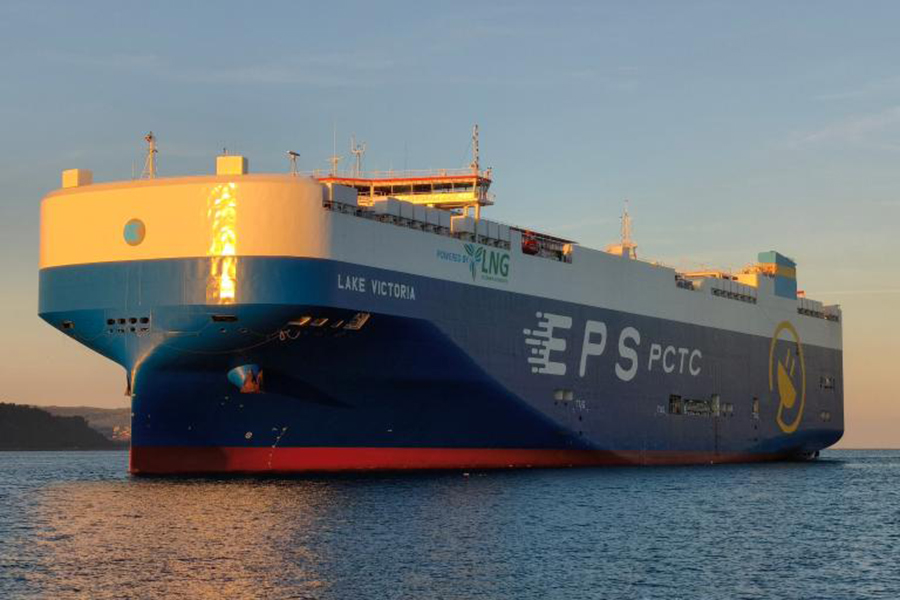
His company is among a small group of private operators attempting to reverse the trend. In January 2025, it launched a new cargo vessel capable of carrying up to 22 loaded trailers — equivalent to over 1,000 tonnes in a single trip.
The vessel connects Uganda to regional trade hubs, including Kisumu and ports in Tanzania, using a roll-on, roll-off system that allows trucks to board directly, reducing handling time and costs.
“We believe we can recreate multimodal transport connecting the corridors that are serving Uganda,” Mbonye said.
Despite these efforts, the scale of activity on the lake remains limited. Francis Baryevuga, General Manager of Grindrod Logistics, estimates that only about five Ugandan-linked vessels are currently operating on Lake Victoria.
“That shows how underutilized it is,” he said. “Lake Victoria has so much potential that we’re not harnessing.”
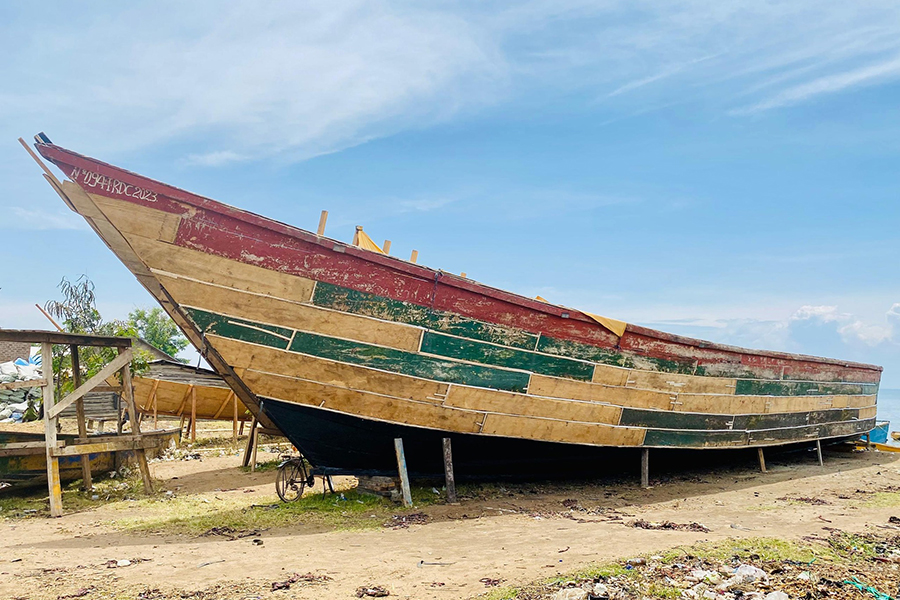
Of these vessels, two are owned by Uganda Railways Corporation, one by a private marine transport company, and two fuel tankers operate between Kisumu and Uganda under another private operator.
The small fleet reflects deeper structural issues, particularly the lack of adequate infrastructure. Both Mbonye and Baryevuga point to deteriorating port facilities as a major bottleneck.
At Port Bell, Uganda’s main inland port, aging infrastructure struggles to meet current demand. Built decades ago, the facility now faces maintenance challenges and capacity constraints.
Baryevuga paints a stark picture, citing run-down link spans dating back to the 1970s, debris in the water, and even a sunken vessel that remains lodged near the port, posing a navigation hazard.
Similar conditions exist in Jinja, where port infrastructure has also deteriorated.
Such shortcomings have far-reaching implications. Traders and shipping operators are reluctant to commit cargo to a system they perceive as unsafe or unreliable.
“As long as the facilities do not give confidence, traders will remain hesitant,” Baryevuga said.
The challenges are not uniform across the region. Industry players say Uganda is lagging behind Kenya and Tanzania in developing inland water transport infrastructure.
Better-developed ports and more coordinated policies in neighbouring countries have allowed them to extract greater value from the lake, leaving Uganda at a competitive disadvantage.
For Collins Agaba of the Private Sector Foundation Uganda, the issue ultimately comes down to risk and returns.
“Private sector would like to invest, but they ask: where are you getting your returns as fast as possible?” he said.
Agaba argues that the absence of an enabling environment — characterized by poor infrastructure, limited incentives, and policy uncertainty — has discouraged investment.
“If I put my ship on water, do I have the infrastructure? We don’t have ports,” he said, adding that government must take the lead by investing in infrastructure before expecting private capital to follow.
“It is like not putting the cart before the horse,” he said.
Ironically, water transport remains significantly cheaper than road freight. Baryevuga estimates that moving cargo by water costs between $18 and $22 per tonne, compared to about $50 by road.
The savings stem from economies of scale, as vessels can carry large volumes in a single trip.
“Water transport is normally the cheapest means of moving cargo,” he said.
Yet cost alone has not been enough to drive adoption. Agaba points to concerns about reliability, scheduling, and safety as key barriers.
“Traders want something reliable and timely. The trust is not yet there,” he said.
Beyond infrastructure, stakeholders highlight gaps in safety systems, marine expertise, and insurance coverage. Limited availability of marine insurance for inland routes further complicates matters, leaving traders exposed to risk.
Policy inconsistencies across the region also undermine the sector. Baryevuga noted that port charges vary widely between countries, with Tanzania reportedly imposing higher tariffs. This lack of harmonization erodes the cost advantage of water transport.
“If the three governments harmonize port charges, it would encourage more people to adopt water transport,” he said.
Edward Katumba Wamala, Minister of Works and Transport, said the government is aware of the challenges and is taking steps to address them. Central to this effort is the development of Bukasa Port, a new inland port intended to complement and eventually ease pressure on Port Bell.
“The port became important after we realized trade volumes are increasing and Port Bell can no longer meet demand,” Katumba said.
Bukasa is designed to handle bulk cargo, particularly imports routed through Tanzania, and will be integrated with road and rail networks. The project is part of a broader strategy to strengthen multimodal transport, linking Uganda to both the Northern and Central Corridors.
“We are trying to open alternative routes so that cargo can move efficiently,” Katumba said.
All stakeholders agree on one point: the future lies in integration. The long-term solution is a multimodal system where cargo moves by rail from coastal ports, transfers to lake vessels, and then connects to road networks for final delivery inland.
“If I bring my cargo by water, how fast can I move it inland?” Agaba asked, emphasizing the importance of last-mile connectivity.
The urgency is clear. Uganda imports over 8 million tonnes of goods annually while exporting far less, creating a persistent trade imbalance. High logistics costs further erode the country’s competitiveness.
Mbonye estimates that Uganda spends millions of dollars each year on foreign trucking services due to limited domestic capacity. Reviving lake transport could reduce these costs, ease pressure on roads, and unlock new economic opportunities.
Despite the challenges, there are signs of progress. Private sector investments, government infrastructure projects, and growing awareness of the lake’s potential are beginning to shift the narrative.
But the path to recovery remains uncertain. Without coordinated action across infrastructure, policy, and investment, the sector risks remaining trapped in a cycle of underperformance.
Lake Victoria’s cargo transport system now stands at a crossroads. On one side lies a history of decline marked by neglect and missed opportunities. On the other is the promise of revival driven by private investment, government intervention, and regional cooperation.
As Uganda grapples with rising trade volumes, congested roads, and high logistics costs, the case for water transport has never been stronger.
The question is whether the country can act fast enough to reclaim a lost advantage and turn its largest lake back into a lifeline for trade.
